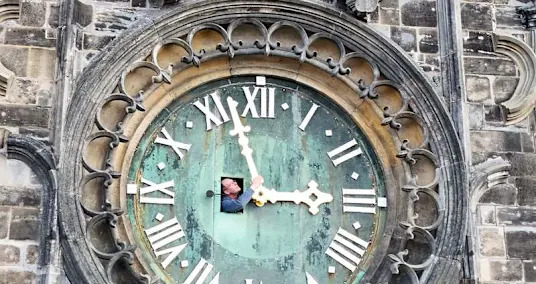
Clocks across the majority of European countries are set to go forward by one hour early on Sunday as the continent moves to daylight saving time, also known as summer time.
Clocks in most European nations including Germany advance by one hour at 2 am (0100 GMT) to 3 am, heralding longer evenings and brighter days.
This means that for the coming months parts of Europe will be on Central European Summer Time (CEST), before moving back to Central European Time (CET) in the autumn, when clocks go back again by an hour on October 25.
The aim of the change is to make better use of daylight in the shorter days of the winter in the northern hemisphere.
The signal for the automatic changeover of the clocks in Germany comes from the Federal Institute of Physics and Metrology (PTB) in the northern city of Braunschweig, also known as Brunswick in English.
The institute's experts ensure that radio-controlled clocks, station clocks and many industrial clocks are supplied with the signal via a long-wave transmitter called DCF77 in Mainflingen near Frankfurt.
LATEST POSTS
- 1
 The beauty advent calendar boom is here. Sephora kids are all in.
 - 2The Electric Toyota Hilux Is Finally here, But It's Not Cheap
- 3My skin feels drier, my lips thinner and my makeup heavier. How do I adjust my routine for aging skin?
- 4Instructions to Amplify Certifiable Experience While Chasing after an Internet Advertising Degree
- 5Germany's Bundestag extends two armed forces missions abroad




- Pick Your Favored kind of sandwich
- Step by step instructions to Boost the Eco-friendliness of Your Smash 1500.
- A volcanic eruption may have catalyzed the plague's arrival in Europe, study suggests
- Giant ‘toothed’ birds flew over Antarctica 40 million to 50 million years ago
- Unusual 'ingredients' helped stars form in a galaxy near the Milky Way
- At least 36 dead in major fire in Hong Kong residential blocks
- Top German court to rule on claims by Wirecard shareholders
- Independence from the rat race: How to Save and Contribute Shrewdly
- Artemis 2 astronauts fly around the moon in record-breaking lunar loop by NASA