The Paris Agreement’s “stretch goal” of limiting warming to 1.5 C above preindustrial levels is no longer feasible, according to an analysis of 15 market outlooks compiled by think tank Resources for the Future.
Energy-related CO₂ surpassed 38,000 million metric tons in 2024, and most forecasts don’t expect a peak until sometime between 2030 and 2035, with reductions by 2050 varying significantly. The most aggressive projection — the International Energy Agency’s Net Zero scenario — demands emissions fall by 13.4% every year through 2050 (the steepest drop this century was 5%, during COVID-19 shutdowns). Renewables will keep reshaping the energy mix, rising from roughly 15% of primary energy in 2024 to more than 20% by 2050. But that won’t be enough to meaningfully cut emissions while fossil fuels enjoy strong markets across the Middle East, Asia, and Africa. Rising electricity demand is also compounding the issue. Global power generation roughly doubled between 2000 and 2024, and could climb another 59% — or more than double again under some scenarios — by 2050, driven by the AI boom, the electrification of transport, and the rapid spread of air conditioning. Renewables are expected to supply a chunk of that new demand, but those additional terawatts represent “an energy addition, not an energy transition,” the report’s authors wrote.

LATEST POSTS
- 1
 Kona SUV: The Courageous Minimized That is Catching Hearts Around the world
- 2Partake in the Outside: Senior-Accommodating Exercises for 2024
- 3Could the Star of Bethlehem have actually been a comet?
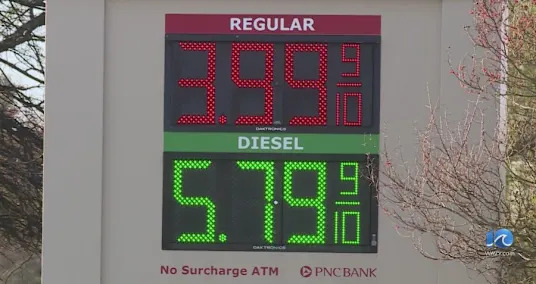
- 4Pain at the pump for Hampton Roads residents
- 5More than 800 flights canceled as FAA cuts traffic at 40 major airports. Here's what to know.



- Monetary Strengthening: Assuming Command over Your Cash
- The Force of Systems administration: Individual Examples of overcoming adversity
- Jury says Johnson & Johnson owes $40 million to 2 cancer patients who used talcum powders
- One perk to marrying Richard Marx later in life? 'We don't have time' for stupid arguments, says Daisy Fuentes.
- Have gravitational waves provided the first hint of primordial black holes born during the Big Bang?
- The Best Web-based Courses for Expertise Improvement
- A definitive Manual for the Over-Ear Earphones
- Manual for Notorious Fragrances: Immortal Aromas
- Comet C/2025 K1 (ATLAS) breaks apart in incredible telescope photos